We engineer high-impact digital craft, generative AI search & custom platforms.
From Generative Engine Optimization (GEO) to custom headless web platforms and enterprise AI agents — we help visionary brands across EU, US & MENA build measurable search visibility, improve conversion journeys, and launch category-defining digital products.
Full-scale digital transformation for Austrian market leader — combining modern brand identity, sub-second web architecture, GEO search engine authority, and real-time automated lead collection.
Comprehensive loyalty and distribution platform combining immersive digital brand experiences, customer rewards mechanisms, and high-velocity commerce distribution.
Modern customer management system and sports operations platform with comprehensive court booking, tournament scheduling, member portals, and integrated knowledge docs.
High-concurrency monitoring script tracking unlimited Telegram groups in real time, classifying user intent with AI, and dispatching hot enquiries to marketing teams in milliseconds.
PROJECT OUTCOMES4 signals
Alert Latency
<1.8sReal-Time Dispatch
Intent Accuracy
98.4%Validated Eval
Group Capacity
UnlimitedConcurrent MTProto
Response Velocity
10x FasterMarketing SLA
Python AsyncIOTelethon MTProto APIFastAPILLM Intent PipelineRedisWebhooks / Bot API
Discover the world's most beautiful urban parks. Your guide to finding the perfect green escape in any city — custom-crafted full-stack MVP built for instant geospatial exploration.
PROJECT OUTCOMES4 signals
Time to Market
4 WeeksZero to Production
Rendering Rate
60 FPSVector Map View
Search Response
≤50msInstant Query
Mobile PWA
100/100Lighthouse Score
React / TypeScriptMapLibre GLGeospatial IndexingTailwind / Modern CSSVercel Edge Platform
New brand website and digital identity engineered for an international equity and investment holding group, projecting sovereign institutional trust and elite financial prestige.
PROJECT OUTCOMES4 signals
Performance Score
100/100Lighthouse Field
Global TTFB
≤150msp75 Edge Cached
Aesthetics Tier
AwwwardsInstitutional Grade
Accessibility
WCAG 2.2AA Compliant
TypeScriptModern Headless EngineGPU-Accelerated Micro-MotionCloudflare Enterprise EdgeBespoke Design System
New brand concept and digital experience for an upscale barber and salon network, featuring tactile dark-mode styling and frictionless appointment booking.
Twenty-One Engineered Tracks for Measurable Digital Growth
From a rapid 3-day technical audit to full-scale custom SaaS and Generative Engine Optimization. Fixed scope and transparent pricing agreed up front.
Audit
Express audit of website, store or web product
A quick look at the current site: speed, UX, SEO, analytics, conversion and technical issues. Perfect when a client says: "the site exists but doesn’t sell", "it’s slow", "no idea what to improve".
✦
Outcome:A short report with problems, priorities and an improvement plan. The client understands what to do first and what budget is needed.
3–7 business days
From € 1,500
Strategy
Discovery & product strategy
We unpack the business problem, target audience, competitors, user scenarios, required features and risks. This is preparation before development — so we don’t build anything unnecessary.
We design how the system should be built: frontend, backend, database, integrations, security, hosting, scaling.
✦
Outcome:A technical architecture, stack recommendations, integration diagram, team and timeline estimate.
1–3 weeks
From € 4,000
Design
UX/UI design & prototype
We create a clear interface in Figma: page structure, user scenarios, visual style, responsive layouts.
✦
Outcome:A finished design and clickable prototype you can use to align on the product and hand off to development.
3–10 weeks
From € 2,000
Web
Corporate website or WOW-site
We build a modern website for a company, product or service: structure, design, development, lead forms, analytics, basic SEO.
✦
Outcome:A launched site that clearly explains the offer, collects leads and is ready for promotion.
4–10 weeks
From € 5,000
E-commerce
E-commerce: Shopify, Shopify Plus, WooCommerce
We launch or improve an online store: catalog, product cards, cart, checkout, payments, shipping, CRM, email marketing, analytics.
✦
Outcome:A working store with healthy conversion, a convenient admin panel and basic sales automation.
6–16 weeks
From € 15,000
Growth
E-commerce conversion optimization
We find bottlenecks in the customer journey: home, catalog, product card, cart, checkout, upsell, email scenarios.
✦
Outcome:Growth in conversion, average order value or repeat purchases through UX fixes, A/B hypotheses and automation.
2–8 weeks
From € 4,000
MVP
MVP for a startup
We quickly build the first working version of a product to validate the idea on the market: user accounts, roles, payments, database, admin, basic analytics.
✦
Outcome:An MVP you can show to investors, first clients or launch as a pilot.
2–4 months
From € 30,000
Product
Custom SaaS, portal or web app
We develop a full web product tailored to the client’s business processes: user dashboards, reports, subscriptions, integrations, access rights.
✦
Outcome:A finished system built around the client’s processes that can grow and scale.
From 3 months
From € 60,000
Integrations
Backend & API integrations
We connect different systems together: site, CRM, ERP, warehouse, payments, shipping, email, SMS, analytics services.
✦
Outcome:Less manual work, data syncs automatically, processes become faster and more transparent.
2–8 weeks
From € 5,000
Automation
Business process automation
We automate repetitive operations: order processing, notifications, reports, data import/export, internal admin panels.
✦
Outcome:Time saved for the team, fewer errors, faster processing of requests and orders.
2–10 weeks
From € 6,000
AI
AI agents & LLM integrations
We embed AI into company processes: chatbots, sales agents, request handling, knowledge-base answers, document generation, ticket classification.
✦
Outcome:A working AI tool that helps the team sell, support customers or process data.
1–3 months
From € 7,500
AI
RAG / company knowledge base
We build a system where AI answers from the client’s internal documents: regulations, contracts, instructions, FAQ, support base.
✦
Outcome:Employees or clients get fast answers from verified documents — not from a generic "internet" model.
4–10 weeks
From € 8,000
SEO
Technical SEO & Core Web Vitals
We improve the technical state of the site: speed, indexing, page structure, schema.org, errors, mobile version, Lighthouse / Core Web Vitals.
✦
Outcome:The site loads faster, gets indexed better and is ready for organic traffic growth.
2–6 weeks
From € 3,000
DevOps
DevOps, CI/CD & cloud deploy
We set up a stable release process: GitHub Actions, Docker, Vercel, DigitalOcean, AWS, Cloudflare, error monitoring.
✦
Outcome:The project is easier to update, fewer manual errors on releases, clear infrastructure for growth.
1–4 weeks
From € 3,000
Support
Technical support & evolution
After launch we keep the project alive: fixes, small improvements, monitoring, consultations, planning the next releases.
✦
Outcome:The client isn’t left alone with the product; it runs stably and keeps evolving.
Monthly
From € 500 / month
Agency Track
Agency outsourcing & white-label engineering
Dedicated senior squads and overflow capacity for digital and design agencies. We execute complex frontends, Shopify stores, and web applications completely under your brand and strict NDA.
✦
Outcome:Pixel-perfect production code delivered on time, full IP ownership, and instant capacity without full-time hiring.
1–12+ months / Sprints
From € 4,800 / sprint
PropTech
Booking & rental platforms with direct PMS integration
Direct booking engines for boutique hotels, luxury rentals, and fleet operators with 2-way PMS sync (Guesty, Hostaway, Cloudbeds, Mews) and Stripe deposit holds.
✦
Outcome:Recapture 15%–25% in OTA commissions with instant rates, zero double bookings, and automated guest onboarding.
Bespoke Shopify Online Store 2.0 themes without slow page builders. Native Liquid sections, Shopify Functions, and automated ERP/WMS/CRM data sync.
✦
Outcome:Sub-second mobile loading, 95+ Core Web Vitals, elimination of third-party app subscriptions, and higher checkout conversion.
4–10 weeks
From € 8,500
PropTech
Interactive floor plans & real estate developer websites
Immersive property developer platforms with clickable facade navigators, interactive SVG floor plans, dynamic unit filters, and instant CRM lead capture.
✦
Outcome:Higher off-plan conversion rates, instant PDF exposé downloads, and direct synchronization with real estate CRMs.
5–10 weeks
From € 9,500
AI Hardening
Refinement of AI-vibe-coded MVPs & production hardening
We audit, secure, refactor, and stabilize apps built with Cursor, Claude Code, Lovable, or v0 before and after launch: Supabase RLS security, modular typing, and CI/CD.
✦
Outcome:A hardened, scalable codebase that passes investor due diligence and protects customer data from breaches.
1–4 weeks
From € 5,000
Discovery
Website blueprint & paid technical discovery
A structured scoping sprint to de-risk major web investments: user journeys, C4 system architecture, ERD database models, clickable wireframes, and vendor-neutral RFQ specifications.
✦
Outcome:Complete technical specification, clickable prototype, and fixed-price roadmap before writing a single line of code.
2–3 weeks
From € 3,800
Bottleneck Diagnosis
Where Is Your Product Getting Stuck?
Select your current challenge to see the exact engineering strategy, deliverables, and architecture we recommend.
SELECT YOUR CORE CHALLENGE
✓SOLUTIONBaseline & Qualified Demand
“We have a site, but few leads”
✦Recommended Solution Architecture:
Express audit, technical SEO, conversion optimization
Included Deliverables in this Track:
✓Full Technical Diagnosis & Risk Assessment
✓Fixed-Price Roadmap with Verifiable Milestones
✓Senior-Only Engineering & Deployment
✓30-Day Post-Launch Hyper-Care Support
FIND YOUR NEXT STEP
What is holding your website back?
Choose your priority and leave your email. Our team will follow up to discuss a suitable starting point.
How We Work
From First Chat to Scalable Launch in 9 Clear Steps
No black boxes. You always know what is being built, what input is needed, and what milestone is delivered next.
STEP 01 / 09
First chat
⚡
Lead Squad
Listen to your goal, your current situation and what’s slowing you down.
Project Partner
👤
Tell us the problem in plain words — no formal brief needed.
Verified Milestone Output:
A shared, honest understanding of what you actually need.
Investment & Rates
Transparent Senior Engineering & Strategy Rates
For most projects we agree on a fixed scope and milestone deliverables. For dedicated sprint extensions and team outsourcing, build your custom squad below.
DEDICATED SPRINT TEAM CALCULATOR
Assemble Your Dedicated Engineering Squad
Load Squad Preset:
#1
Staff
1x
20h / wk
Weekly Subtotal€1,700
#2
Staff
1x
35h / wk
Weekly Subtotal€2,100
#3
Staff
1x
20h / wk
Weekly Subtotal€1,700
Total Squad Size3 Specialists
Weekly Capacity75h / week
Blended Hourly Rate€73 / hr
Est. Monthly Sprint~€23,100
✓ Dedicated senior engineering✓ Direct Slack / Teams channel✓ Agile weekly sprint reviews
Role
Tangible Business Output
Rate
Product / Project Manager
Clear scope, realistic timeline and a team that ships on schedule.
€ 55 per hour
Solution Architect
A scalable, secure architecture that avoids costly rebuilds later.
€ 85 per hour
UX/UI Lead
Intuitive, on-brand interfaces that lift conversion and engagement.
€ 85 per hour
Frontend / Backend Developer
Fast, reliable features delivered with clean, maintainable code.
€ 60 per hour
QA Lead
Fewer production bugs and confident, stable releases.
€ 80 per hour
AI/ML or RAG Engineer
Working AI features that automate work and answer from your data.
€ 100 per hour
DevOps Engineer
Reliable deployments, monitoring and CI/CD pipelines.
€ 60 per hour
Data Engineer
Clean, reliable data pipelines and insights.
€ 60 per hour
Security Engineer
Secure by design, compliant and protected against threats.
€ 80 per hour
SEO Specialist
Improved rankings, traffic and visibility in search results.
€ 45 per hour
LET’S TALK IT THROUGH
Prefer a quick call?
Leave your number and a convenient time, including your time zone. We’ll contact you to arrange a callback.
SIMPLY EXPLAINED • CLIENT GUIDE
Plain Answers to Core Web, Search & AI Questions
Web development, search ranking, and AI visibility can feel full of confusing jargon. Here are straightforward explanations, everyday analogies, and clear visual diagrams to help you make informed digital decisions.
Showing 10 of 10 questions
Search basics2 min read
Why is my website online but missing from Google?
Putting a website online makes it available to visit. It does not mean Google has found it, saved it, or chosen to show it for a particular search.
💡
Everyday Analogy
“Think of opening a shop. The door is open, but people still need a way to discover it.”
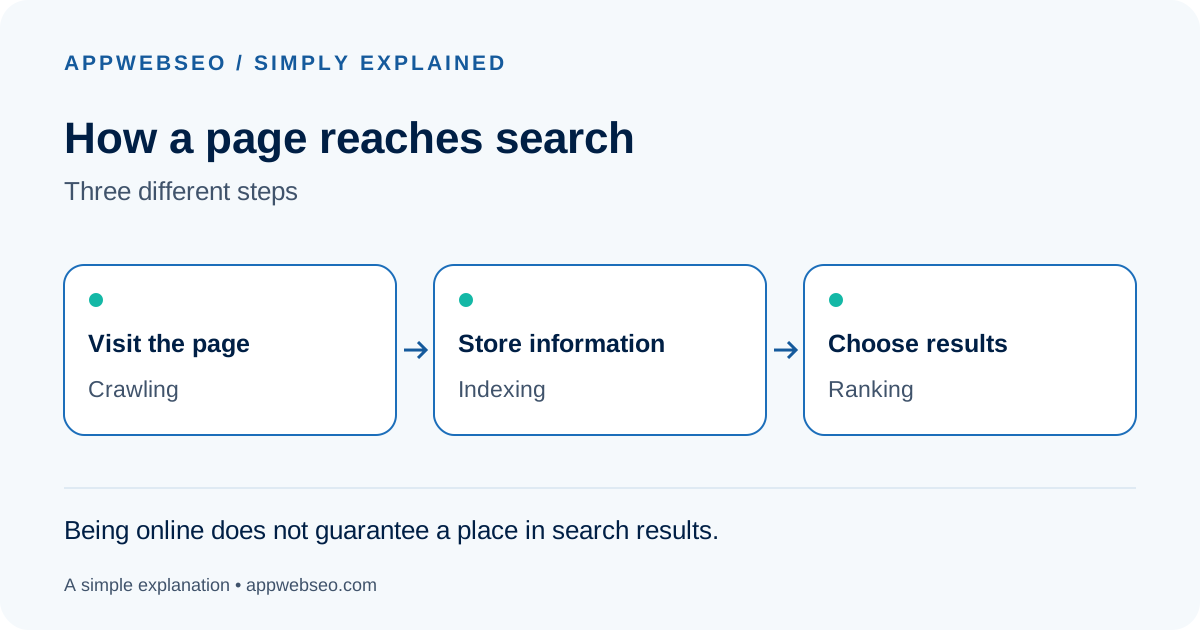
Google uses automated software to visit pages across the web. This step is called crawling.
It may then store information about a page in its global search database, called an index. When someone searches, Google chooses which indexed pages to show and in what order. This is ranking.
Crawling, indexing, and ranking are three completely separate steps. A page can be live without being crawled, crawled without being indexed, or indexed without ranking prominently for broad search queries.
Crawling: Google bots discovering and scanning webpage content and code.
Indexing: Storing and organizing discovered page data in Google search database.
Ranking: Evaluating and ordering indexed pages when a search query is entered.
Being online does not guarantee a place in search results.
Real-world example: A new bakery website might appear immediately when searching its exact brand name, but remain hard to find for “birthday cakes near me” because it has not yet earned authority for that broader category query.
🚀Where to start
Ask whoever manages your website to inspect its main page in Google Search Console. Ask them to verify whether Google can access the page and whether it is officially indexed.
⚠️Key mistake to avoid
“Google cannot find the page” (indexing issue) and “the page appears too far down” (ranking issue) are different problems. Knowing which one you have makes the next fix much faster.
AI search2 min read
What does it mean to appear in an AI answer?
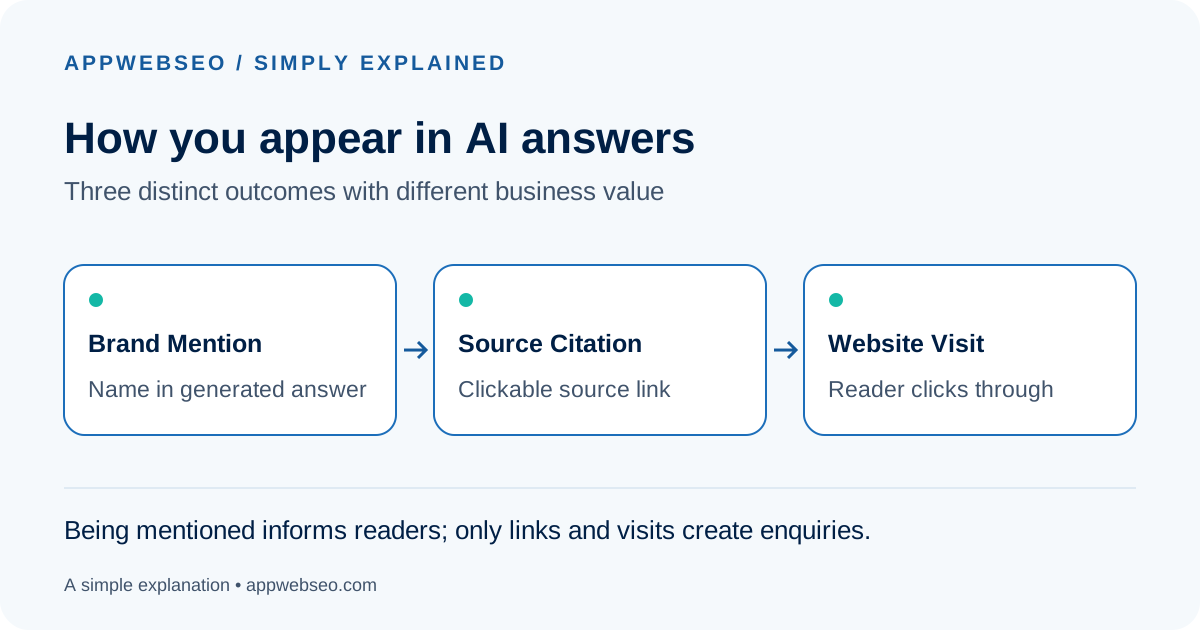
An AI search tool can write an answer instead of showing only a list of website links. Your business might appear in that answer by name, or the answer might link to one of your pages as a source.
💡
Everyday Analogy
“A name mention tells readers about you. A source link gives them a way to visit your website. Neither automatically becomes an enquiry or a sale without a compelling next step.”
When someone asks an AI engine like ChatGPT Search, Perplexity, or Google AI Overviews a question, the model synthesizes information from authoritative web sources.
A page that provides direct, well-structured answers with real data and pricing gives AI engines factual snippets to quote and source.
You may hear the term GEO (Generative Engine Optimization). It describes engineering content and authority so AI models recognize your brand as a primary source. No secret schema is required: accessibility, factual precision, and crawlable HTML remain the foundation.
GEO: Generative Engine Optimization: optimizing for citations in AI model answers.
Source Citation: A clickable source card or footnote linked directly to your page.
Brand Mention: The model naming your product or business in prose without a direct link.
Being mentioned informs readers; only links and visits create enquiries.
Real-world example: When asking “What should I check before rebuilding my store?”, an AI engine cites an article with exact maintenance costs and checklists, rather than a generic promotional sales page.
🚀Where to start
Write down five real questions customers ask before buying. Check whether your website answers each one directly, with examples and concrete evidence.
⚠️Key mistake to avoid
Publishing an answer does not guarantee an AI tool will use it. Treat mentions, source citations, website visits, and customer enquiries as separate metrics to measure.
Search basics2 min read
What is structured data, and can visitors see it?
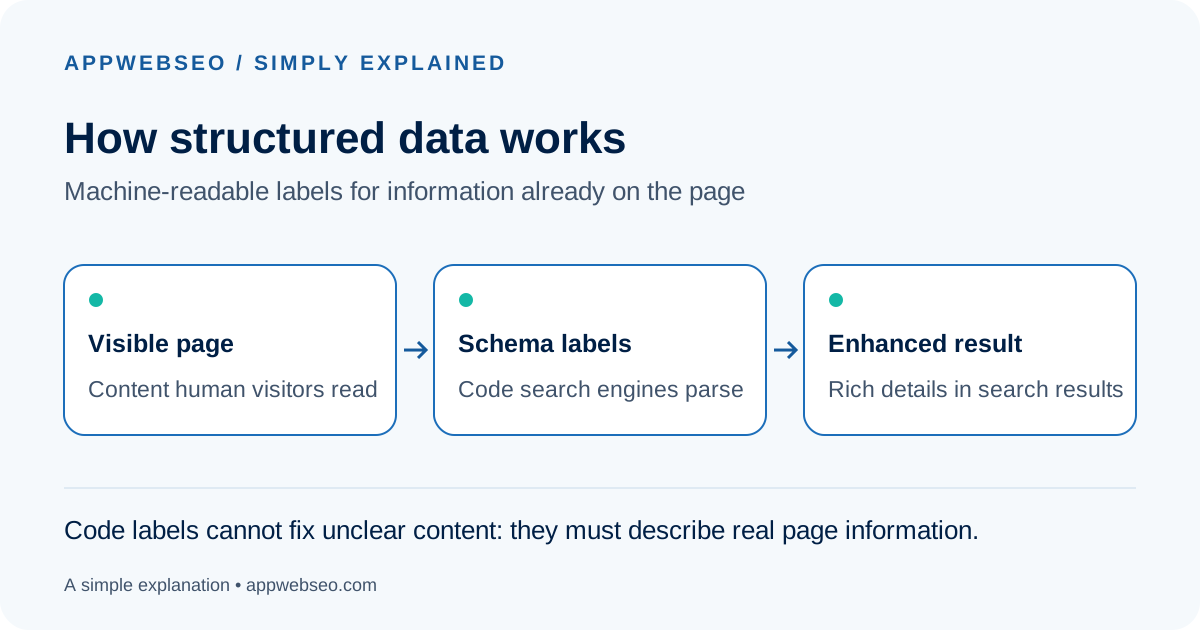
Structured data is extra information in a webpage’s code that labels what the page describes. Visitors usually read the normal page. Search systems can also read these labels.
💡
Everyday Analogy
“Think of a parcel. A person might recognize what is inside from a description, but clear standardized barcode labels make the contents instantly readable by machines.”
On a product page, structured data explicitly labels the product name, price, currency, and in-stock status. On an article, it labels the author, publisher, and publication date.
The standardized format is called Schema.org JSON-LD. For supported types, Google uses these labels to display rich snippets—such as star ratings, pricing badges, and FAQs—directly on search results.
Correct labels do not guarantee rich snippet display, but they remove ambiguity for search robots and AI citation parsers.
Schema.org: The universal collaborative standard for structured data on the internet.
JSON-LD: A lightweight JavaScript notation placed in a script tag that robots read.
Rich Snippets: Visual search result enhancements like stars, price ranges, and FAQs.
Code labels cannot fix unclear content: they must describe real page information.
Real-world example: If a lamp costs €80 on your page but its code says €60, the labels are misleading. Updating the visible price alone while forgetting the code leaves the search preview out of date.
🚀Where to start
Ask your website developer which key pages have structured data and how those labels stay automatically synchronized when content or prices are updated.
⚠️Key mistake to avoid
Useful labels describe real information. They cannot turn an unhelpful page into quality content or make an unsupported claim true.
Website performance2 min read
Why does my website feel slow even after it appears?
A website can appear on screen before it is comfortable to use. You may see the heading while the main image is still loading, tap a button that responds late, or watch the page jump just as you try to click.
💡
Everyday Analogy
“Imagine entering a shop while staff are still moving the shelves. You are inside, but shopping is frustrating and disorienting.”
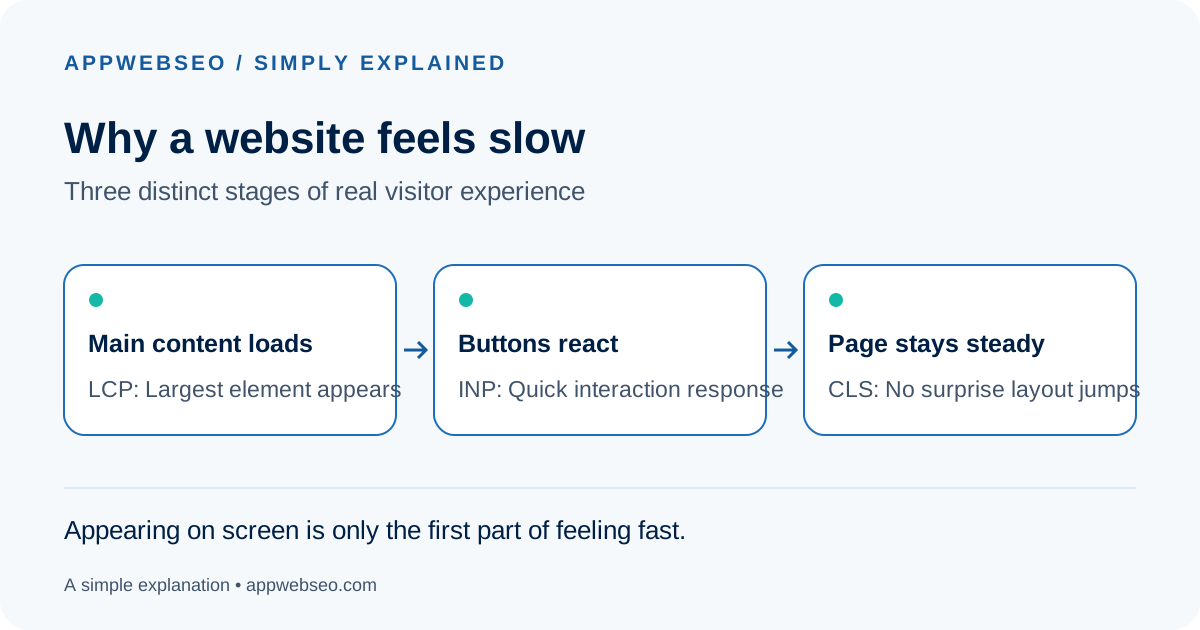
Google measures this real-world user experience using Core Web Vitals.
Largest Contentful Paint (LCP) measures when the main visible content finishes loading. Interaction to Next Paint (INP) measures how quickly the page responds when someone taps a button or types. Cumulative Layout Shift (CLS) measures whether elements unexpectedly jump around while reading.
A page can have a high synthetic lab score while still feeling sluggish on real mobile devices due to heavy JavaScript blocking the browser main thread.
LCP: Largest Contentful Paint: how fast the primary visual content renders (< 2.5s).
INP: Interaction to Next Paint: how fast buttons and inputs respond to taps (< 200ms).
CLS: Cumulative Layout Shift: visual stability during loading (< 0.1).
Appearing on screen is only the first part of feeling fast.
Real-world example: A booking page might paint its text in 1 second, but hesitate for 800ms when someone taps a calendar date because heavy background trackers are running.
🚀Where to start
Open your most important service or product page on a smartphone over mobile data and complete a real task. Note down any hesitation, layout jumps, or delayed button responses.
⚠️Key mistake to avoid
A single speed score is only a clue. Specific real-world reports like “The date picker freezes on mobile” are much more actionable than “The website feels slow.”
Website enquiries2 min read
Why do people visit my website but never contact me?
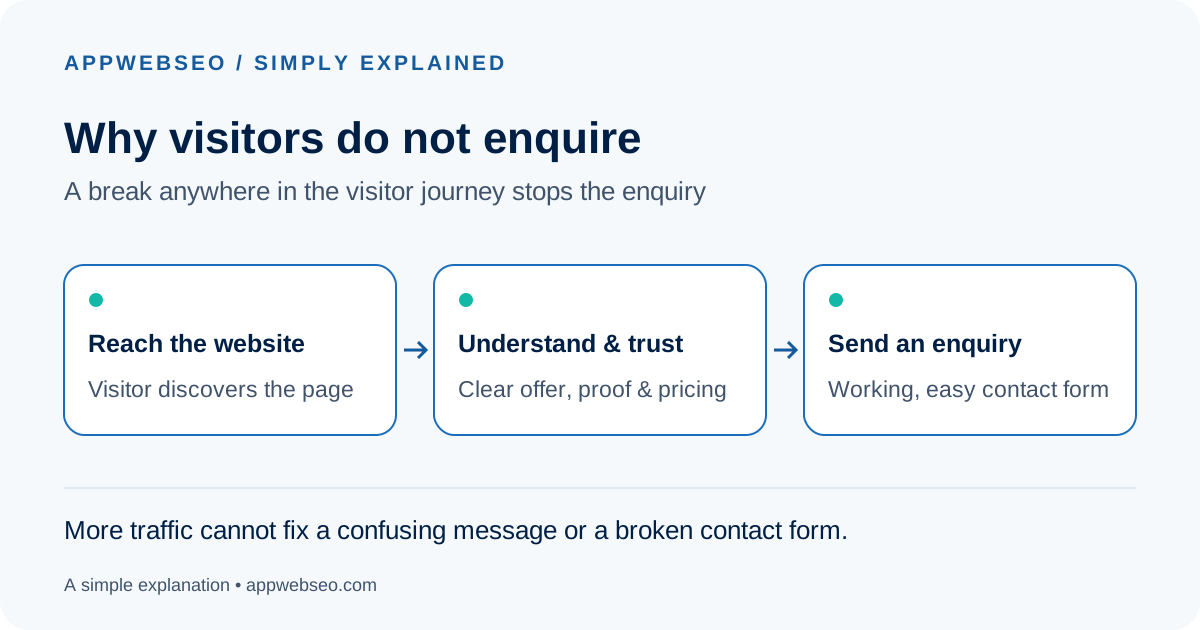
A visit means someone reached your website. An enquiry means they understood enough, trusted you enough, and found it easy enough to take the next step. A gap at any of those points stops the journey.
💡
Everyday Analogy
“Think of someone walking into a shop. They might leave because the shop displays the wrong items, prices are hidden, or nobody explains how to place an order.”
Websites experience the exact same drop-offs. A visitor may not immediately understand who your service is designed for.
They might need an indicative starting price, a concrete past case study, or a clear explanation of what happens after they submit their email.
A conversion is a meaningful action you want a visitor to complete. Conversion rate measures the proportion of visitors who take that action. Simply buying more ad traffic will not fix a leaky funnel.
Conversion: A completed high-value action, like an enquiry, booking, or purchase.
Conversion Rate: The percentage of total visitors who successfully convert.
Friction: Any obstacle, confusing copy, or broken form that causes visitors to abandon.
More traffic cannot fix a confusing message or a broken contact form.
Real-world example: If 1,000 visitors land on your page and 0 contact you, the issue is rarely traffic volume: the headline may not align with their search intent, or the mobile form may fail to validate.
🚀Where to start
Ask someone unfamiliar with your business to use the page on their phone. Can they explain within 10 seconds what you offer, who it helps, and how to contact you? Then submit a test enquiry yourself.
⚠️Key mistake to avoid
If your analytics show zero enquiries, test your tracking and email delivery first. Broken tracking and missing customer demand are completely different issues.
Online stores2 min read
What does “headless Shopify” actually mean?
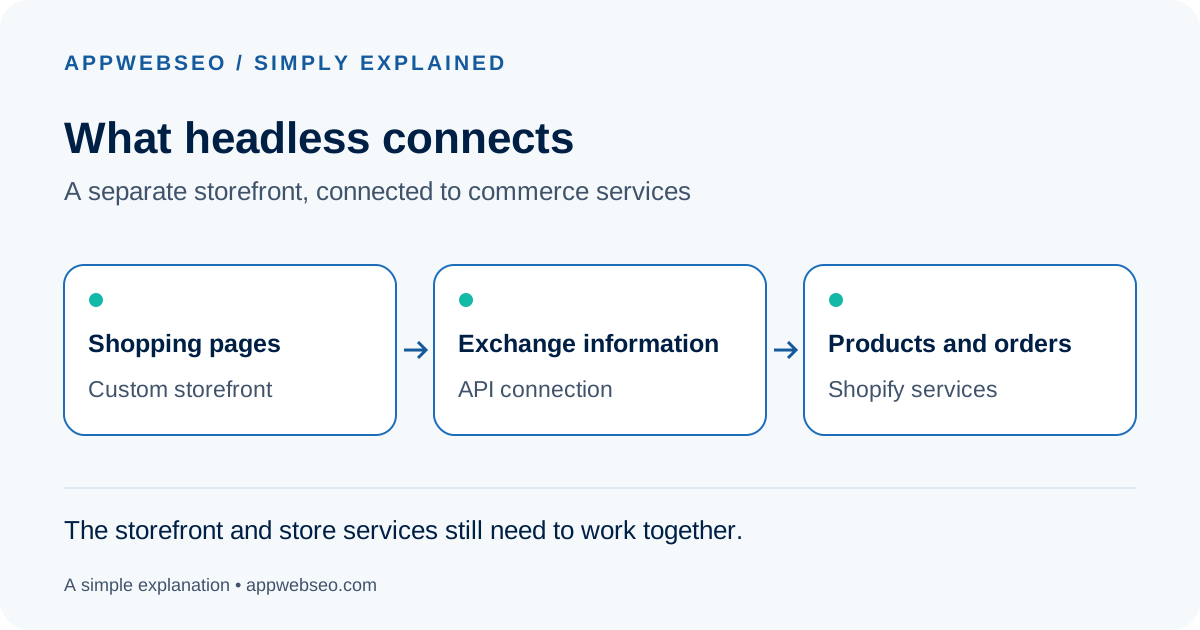
In an online store, the storefront is the part shoppers see: product pages, menus, and the shopping experience. Behind it, other software manages products, inventory, and orders.
💡
Everyday Analogy
“Think of a restaurant changing its dining room while keeping its kitchen. The two still need a reliable, agreed way to communicate orders.”
In a traditional Shopify store, the theme controls both the visual layout and connects directly to the backend.
With headless Shopify, a separately built custom storefront (often built in React or Next.js) connects to Shopify’s commerce services via APIs (Application Programming Interfaces).
Headless gives engineering teams total freedom over design, page speed, and interactive product customizers, but it also creates a separate software application to maintain.
Storefront: The customer-facing visual shopping experience and catalog pages.
Backend Engine: Commerce services managing inventory, payments, discounts, and shipping.
Storefront API: The secure digital channel through which custom frontends fetch store data.
The storefront and store services still need to work together.
Real-world example: A luxury furniture brand wanting 3D configurators and sub-second page transitions across multiple countries uses a custom headless frontend connected to Shopify Plus for checkout.
🚀Where to start
Identify the exact limitation your current store faces. Ask whether a modern standard theme or smaller optimization could solve it before committing to a separate custom frontend.
⚠️Key mistake to avoid
“We need customers to configure multi-part products smoothly” is a clear business requirement. “We need headless because it sounds modern” is not yet a business reason.
Connected systems2 min read
What is an integration, and why would my business need one?
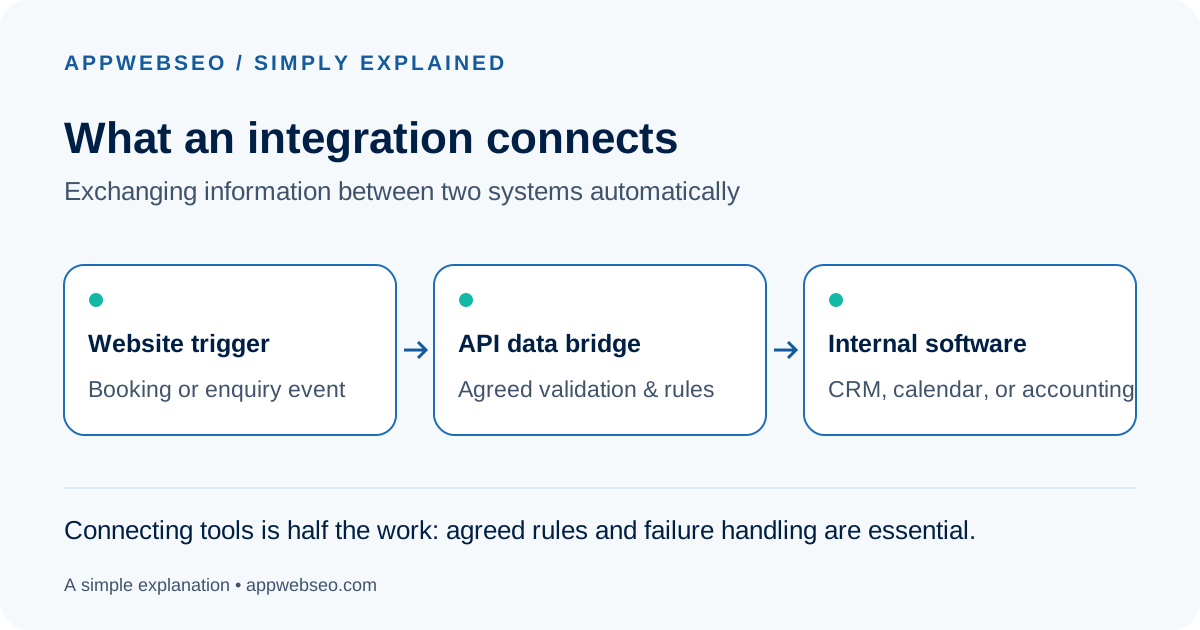
An integration connects two pieces of software so they can exchange information or trigger an agreed action automatically. It eliminates the need to copy the same details from one tool into another.
💡
Everyday Analogy
“Imagine your website receives a booking. Without a connection, staff must manually retype the customer’s name into a calendar. With an integration, the systems sync instantly.”
An API (Application Programming Interface) defines how two independent software applications ask for and exchange data.
Common integrations include sending website enquiries into HubSpot or Salesforce, generating invoices in Xero upon payment, or synchronizing stock levels with an ERP warehouse.
An integration requires clear business rules: which system is the single source of truth? What happens when an employee edits a booking? What happens if an API temporarily fails?
API: Agreed protocol allowing two separate software systems to exchange data securely.
Webhook: An automated real-time notification sent from one app to another when an event occurs.
Source of Truth: The designated authoritative system whose data overrides conflicting records.
Connecting tools is half the work: agreed rules and failure handling are essential.
Real-world example: When an enterprise client submits an enquiry, an automated webhook verifies the business email, logs the lead in the CRM, alerts the account lead in Slack, and creates a shared calendar hold.
🚀Where to start
Identify one repetitive manual task your team performs daily, like copy-pasting form submissions into spreadsheets. Map where the data originates and where it belongs.
⚠️Key mistake to avoid
“The tools are connected” is not the same as “the integration is reliable.” Always test error recovery, changed records, and network dropouts before relying on automated syncing.
AI tools2 min read
How can an AI assistant answer from our company documents?
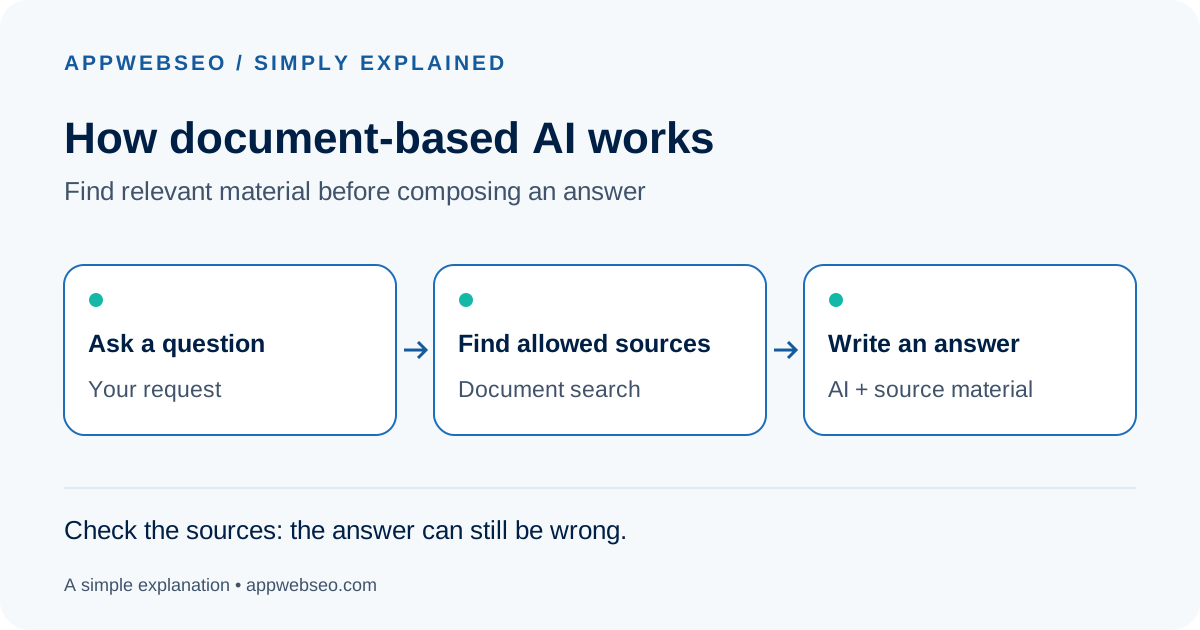
One reliable approach lets an AI assistant search your approved internal documents before generating an answer. This architecture is called Retrieval-Augmented Generation (RAG).
💡
Everyday Analogy
“Think of a new colleague consulting the official company handbook before answering a customer. They do not need to memorize every rule, but they must find the right page.”
Instead of asking an AI model to guess from general training data, RAG first searches your verified company documents for relevant paragraphs.
The system feeds those exact excerpts into the language model alongside the user’s question, instructing it to answer strictly based on the provided material.
This drastically reduces hallucinations and allows the assistant to cite the exact document and page number for human verification.
RAG: Retrieval-Augmented Generation: retrieving verified documents before generating answers.
Vector Search: Searching documents by semantic meaning and concepts rather than exact keywords.
Grounding: Restricting model responses strictly to facts present in the retrieved source text.
Check the sources: the answer can still be wrong.
Real-world example: A customer asks about a warranty exception for an outdoor table. The AI searches the product manual, retrieves clause 4.2, and summarizes the exact policy with a direct citation.
🚀Where to start
Choose one narrow, well-documented topic—such as product care sheets or internal onboarding FAQs—and test answering real customer questions against those files.
⚠️Key mistake to avoid
Always test questions that the documents cannot answer. A properly engineered assistant should say “I cannot find that in our documents” rather than fabricate a confident answer.
Website projects2 min read
Why pay for planning before anyone builds the website?
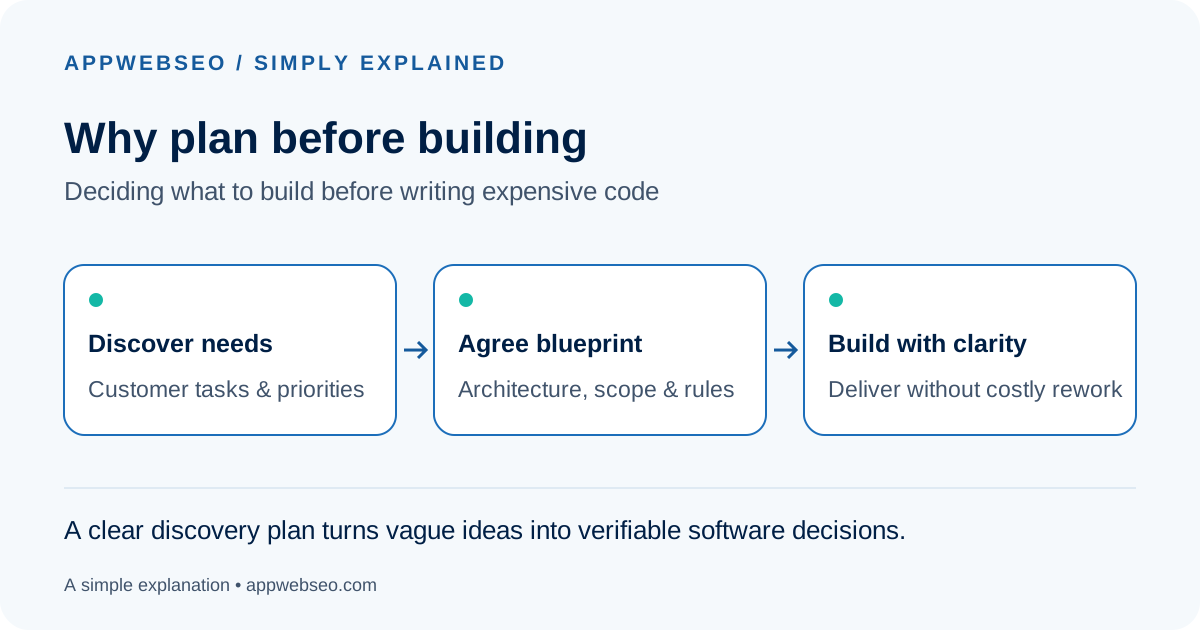
Planning turns “we need a new website” into an agreed, verifiable blueprint of what the website must do. Agencies call this stage discovery. Its output is a clear set of architectural decisions.
💡
Everyday Analogy
“Think of renovating a kitchen. Deciding cupboard colours is much easier once you know where the plumbing goes, which appliances must fit, and how people move through the space.”
During discovery, technical architects and designers clarify who will use the website, what tasks they need to complete, where content originates, and how edge cases are handled.
For example, “add online booking” could mean a simple contact form, or it could mean live calendar availability, multi-currency card payments, automated cancellations, and refunds.
A thorough discovery brief includes user flows, wireframes, technical integrations, data models, and measurable success criteria, preventing costly redesigns during development.
Discovery: The structured research and scoping phase that precedes code production.
Scope Creep: Unplanned feature additions during a project that cause delays and budget overruns.
Specification: The agreed written blueprint outlining system behavior and acceptance criteria.
A clear discovery plan turns vague ideas into verifiable software decisions.
Real-world example: Spending two weeks detailing customer user journeys and third-party API limits prevents three months of custom code being scrapped when an unmentioned billing requirement emerges.
🚀Where to start
Describe the single most critical customer task your new website must make effortless. Ask your development partner to walk through that journey from click to completion.
⚠️Key mistake to avoid
Match the planning depth to the project scale. A brochure site needs a short brief; a multi-market SaaS platform needs comprehensive architectural discovery. Always ask what decisions the planning fee will help you make.
Website usability2 min read
What does it mean to make a website accessible?
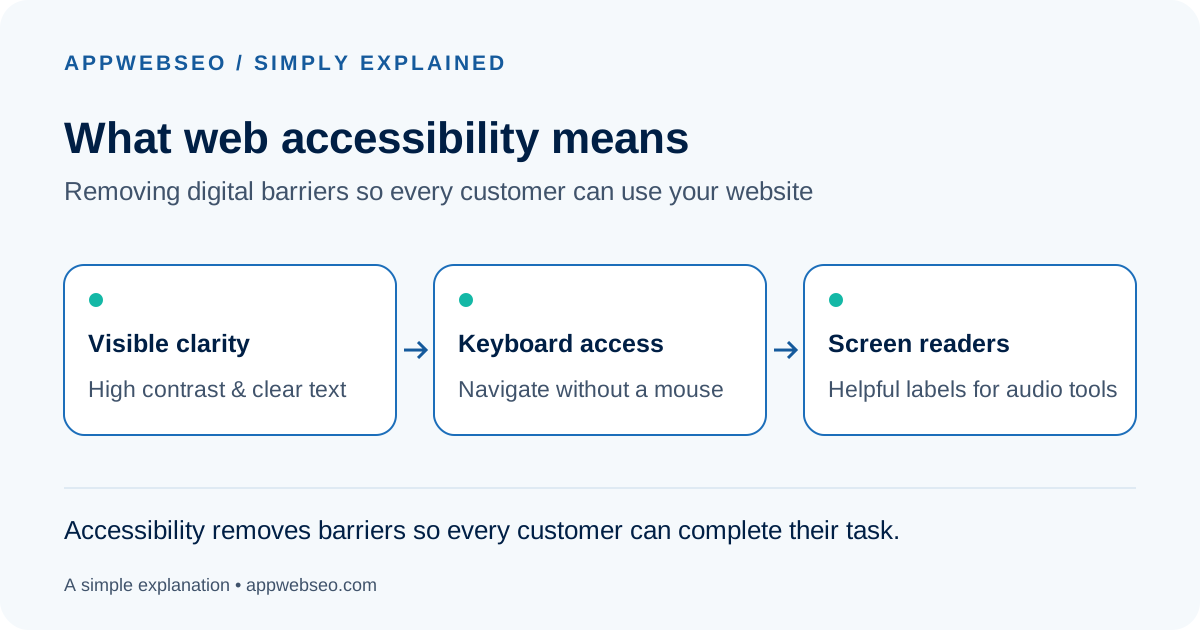
An accessible website is designed so people with different disabilities can understand, navigate, and use it comfortably. This includes visitors who cannot see the screen, cannot use a mouse, or process information differently.
💡
Everyday Analogy
“Think of a building with a steep step at its entrance. The door may be unlocked, but visitors in wheelchairs still cannot enter. A website can create invisible digital barriers through poor contrast and missing keyboard controls.”
Web accessibility follows the international WCAG (Web Content Accessibility Guidelines) standard.
It ensures high visual contrast so text is readable in bright sunlight, full keyboard navigation so users can tab through forms without a mouse, and semantic code so screen readers can announce buttons and links clearly.
Accessible websites also perform better in search engines and AI parsers, because clean semantic HTML helps machines comprehend structure effortlessly.
WCAG: Web Content Accessibility Guidelines: the global technical accessibility benchmark.
Screen Reader: Assistive software that vocalizes or braille-renders screen content for blind users.
Focus State: The visible outline showing which interactive element is currently selected via keyboard.
Accessibility removes barriers so every customer can complete their task.
Real-world example: When a form field fails validation, an accessible website provides a clear descriptive text message and moves focus to the error, rather than merely turning the border red.
🚀Where to start
Unplug your mouse or trackpad and try navigating your main website enquiry flow using only the Tab key, Enter, and Spacebar. See if you can clearly identify your focus point and complete the form.
⚠️Key mistake to avoid
Keyboard testing is one essential check, but not a full audit. Automated tools catch only ~30% of accessibility issues. Real accessibility ensures everyone can do what they came to do.
DIRECT ACCESS TO LEAD ARCHITECTS
Ready to build a faster, higher-converting digital product?
Talk directly with our lead architects and engineers. We scope quickly, transparently, and without agency fluff.