

What are the best AI SEO tools in 2026?
The best AI SEO tool depends on the job. Semrush is our all-round choice for teams that want traditional SEO and AI visibility in one system. Ahrefs is our pick for competitive research, backlinks, and large-scale AI mention discovery. Surfer offers the clearest blend of content optimization and AI tracking. Clearscope suits human-led editorial teams, while Frase connects research, drafting, optimization, and publishing.
For specialized work, choose MarketMuse for content portfolio planning, SE Ranking for rank tracking and AI-result reporting, Writesonic or SEO.AI for production automation, and AirOps for custom workflows at scale. Choose Profound, Peec AI, or OtterlyAI when the primary question is not “How do we rank this page?” but “How does our brand appear in AI answers?”
No platform is best at every layer. Buying an AI visibility tracker when your real bottleneck is technical SEO—or buying an AI writer when you lack original evidence—creates a more expensive workflow without solving the problem.
Best AI SEO tools at a glance
| Tool | Best for | Primary category | Access model | Main trade-off |
|---|---|---|---|---|
| Semrush | One broad SEO and AI-search workspace | All-in-one suite | Self-serve plans and add-ons | Related capabilities sit across several toolkits and limits |
| Ahrefs | Competitive, backlink, and search-backed prompt research | All-in-one suite | Paid plans and Brand Radar options | Indexed prompts and custom prompts answer different questions |
| Surfer | Optimizing content and tracking AI mentions together | Content + AI visibility | Self-serve plans | More platform than a team needs if it only wants briefs |
| Clearscope | Consistent, human-led editorial optimization | Content optimization | Paid plans | Not a full technical SEO or backlink suite |
| Frase | Moving from SERP research to an optimized, published draft | Content workflow | Trial and self-serve plans | Generated work still needs fact and brand review |
| MarketMuse | Prioritizing a large content inventory | Content strategy | Limited free access and sales-led plans | Heavier setup than a per-article optimizer |
| SE Ranking | Rank tracking, reporting, and AI-result monitoring | SEO suite + AI tracking | Trial and self-serve plans | Prompt, market, and API limits vary by plan |
| Writesonic | Fast research, drafting, and agent-assisted SEO tasks | Content automation | Free trial and paid plans | Automation does not remove editorial or technical QA |
| AirOps | Custom content and AI-discovery workflows at scale | Workflow automation | Sales-led | Requires process design, governance, and operational ownership |
| SEO.AI | Hands-off publishing for a small site | Autonomous execution | Paid trial and self-serve plans | Auto-publishing and link activity require close governance |
| Profound | Enterprise AI-answer intelligence and integrations | AI visibility | Self-serve entry and enterprise plans | Value depends on a mature measurement process |
| Peec AI | Clear prompt, source, and competitor analytics | AI visibility | Trial and prompt-based plans | Focused tracker, not a traditional SEO suite |
| OtterlyAI | Accessible daily prompt and citation monitoring | AI visibility | Free trial and prompt-based plans | A small prompt sample can produce noisy conclusions |
Pricing and feature limits change quickly. The access models above were checked on September 4, 2026; verify the vendor's current plan page before buying.
First, separate four different tool categories
“AI SEO tool” now describes products that do very different work. A useful shortlist starts by naming the missing capability.
| Category | What it helps you do | Typical outputs | Examples |
|---|---|---|---|
| SEO suite with AI features | Research keywords and competitors, audit sites, track rankings, analyze links | Keyword sets, audits, rank reports, competitive gaps | Semrush, Ahrefs, SE Ranking |
| Content optimizer | Research a SERP and improve one page or brief | Topic coverage, headings, entities, briefs, content scores | Surfer, Clearscope, Frase, MarketMuse |
| Workflow or execution platform | Automate repeatable research, drafting, publishing, or refresh work | Drafts, workflow runs, CMS updates, content operations | Writesonic, AirOps, SEO.AI |
| AI visibility tracker | Observe brand mentions and citations in generated answers | Prompt responses, mention rate, citations, sentiment, share of voice | Profound, Peec AI, OtterlyAI |
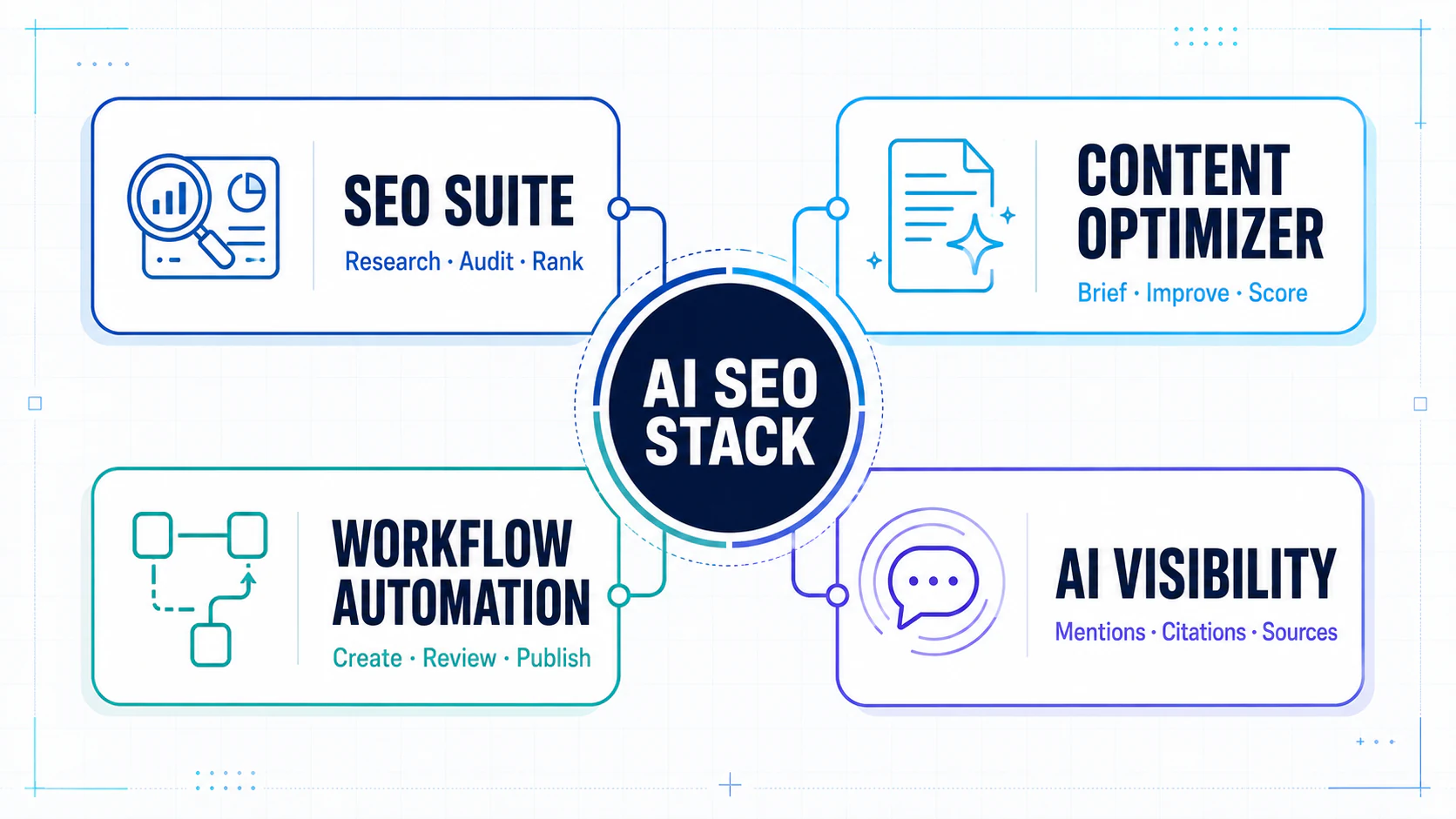
The categories overlap, but their success metrics do not. A content optimizer should improve editorial decisions and page quality. An AI visibility platform should make its sampling method, prompt set, engines, markets, and raw responses inspectable. Neither should be judged only by a proprietary score.
AI SEO tools vs. AI visibility tools
An AI SEO tool generally helps create, diagnose, or improve assets intended to earn organic visibility. An AI visibility tool observes how a brand or domain appears inside answers from systems such as ChatGPT, Google AI Mode, Gemini, Perplexity, or Copilot.
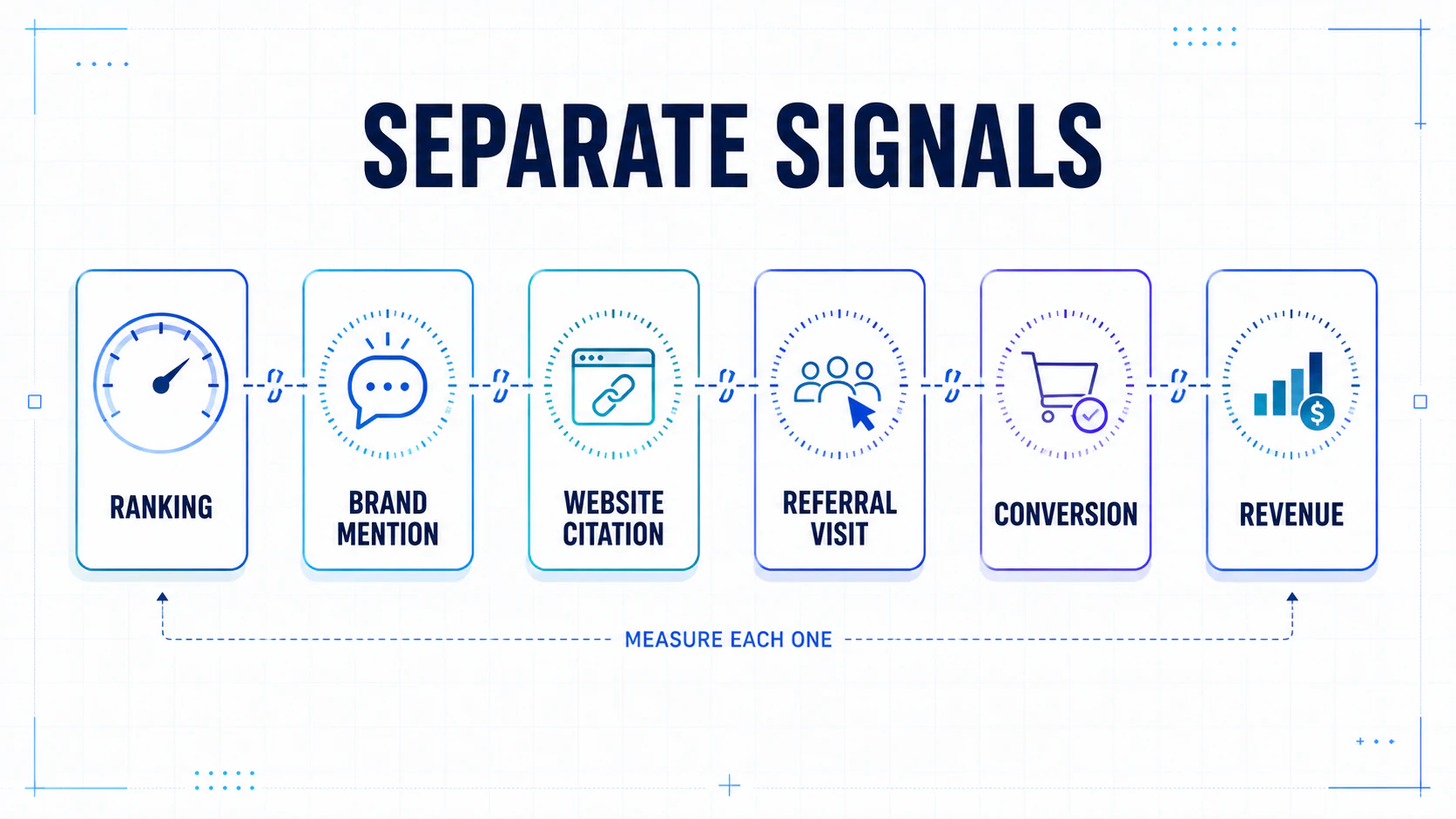
That distinction matters because a brand can be mentioned without its website being cited, and a page can rank in Google without appearing in a sampled AI answer. Treat rankings, mentions, citations, referral sessions, and conversions as separate measurements.
How we researched and selected these tools
This is a documented research comparison, not a claim that we ran every platform for months.
For the September 2026 update, we reviewed the first ten organic results in a Google Austria session for the exact phrase “ai seo tools,” with the social, forum, video, travel, and review domains specified in the research query excluded. Eight of the ten results were comparison articles; the other two were a product page and a free-tool directory.
The recurring search intent was clear: readers want a shortlist, “best for” guidance, capabilities, limitations, pricing context, and a way to choose. The biggest content gap was equally clear: many pages mixed AI-assisted traditional SEO, content generation, and AI visibility as though they were interchangeable.
We used the top-ranking pages to map the questions and tools Google currently associates with the intent. We then checked material product claims against current vendor documentation. We did not copy vendor scores, repeat unverifiable “tested” claims, or rank a vendor first because it published the comparison. AppWebSeo has no affiliate links in this guide.
We evaluated each option on:
- Job fit: Does the product solve a clear SEO, content, automation, or AI-visibility problem?
- Data transparency: Can a buyer understand where the data comes from and inspect useful source-level detail?
- Workflow fit: Does it connect to the tools, CMS, exports, and approvals the team already uses?
- Control: Can people review recommendations and changes before they affect a live site?
- Measurement: Can the output be connected to Search Console, analytics, conversions, or another real outcome?
- Commercial clarity: Are the plan model and meaningful limits understandable before procurement?
1. Semrush: best all-round AI SEO suite
Best for: Agencies and in-house teams that want established keyword, competitor, site-audit, and rank-tracking workflows beside AI-search research.
Semrush is the most practical “one main platform” choice in this list. Its traditional SEO data sits alongside an AI Visibility Toolkit for visibility benchmarking, competitor research, prompt research, brand performance, prompt tracking, and AI-search site checks. Semrush One packages the SEO and AI Visibility toolkits with higher limits.
Why it stands out: A team can move from a keyword or competitive gap to a tracked campaign without building a reporting system from unrelated tools. The vendor also documents update frequency, region coverage, prompt limits, and how its visibility score is calculated.
Watch-outs: “Semrush” is not one simple bundle. Confirm which toolkit includes the feature you need, how many domains and prompts are covered, which reports refresh daily or weekly, and whether each teammate needs a separate license. The standalone AI Visibility Toolkit was listed at $99 per month when checked, but extra domains, users, and prompts can change the real cost.
2. Ahrefs: best for competitive research and prompt discovery
Best for: SEO teams that prioritize backlinks, competitor research, cited-page discovery, and a large search-backed AI prompt index.
Ahrefs combines its established search dataset with Brand Radar. Brand Radar supports discovery across a pre-collected prompt index and separate custom-prompt tracking. It reports mentions, citations, share of voice, cited pages, and competitor comparisons across supported AI platforms.
Why it stands out: The indexed dataset can reveal relevant prompts, entities, sources, and competitors before a team has built its own tracking cohort. That makes it useful for market discovery, not only monitoring.
Watch-outs: A large index is still a sample. It does not represent private conversations or prove what a specific buyer asked. Keep discovery data separate from a controlled custom-prompt cohort. Ahrefs also prices custom prompt checks and access to Brand Radar indexes differently, so compare coverage rather than headline plan names.
3. Surfer: best for content optimization plus AI tracking
Best for: Content teams that want SERP-based writing guidance and AI visibility in the same operating environment.
Surfer connects its Content Editor, Topical Map, Content Audit, and AI Tracker. Its content workflow provides live, competition-based guidance, while the tracker monitors mentions, sources, sentiment, competitive share of voice, and gaps across supported AI surfaces.
Why it stands out: Insight and action live close together. A team can identify a missing topic or prompt, create or refresh the page, and keep monitoring without exporting the opportunity to a separate writing platform.
Watch-outs: A content score is a recommendation, not a ranking guarantee. Blindly satisfying every term or word-count suggestion can flatten voice and add irrelevant copy. Check refresh frequency and prompt coverage for the exact plan; Surfer's AI-tracking limits vary materially between tiers.
4. Clearscope: best for human-led editorial teams
Best for: Editors and writers who want defensible topic-coverage guidance without turning publication into an automatic content pipeline.
Clearscope Optimize grades topic coverage as a writer works, suggests related terms and questions, and integrates with Google Docs, Microsoft Word, and WordPress. Its wider product also covers content inventory, topic discovery, localization, and monitoring.
Why it stands out: The interface and workflow keep the editor in charge. That makes Clearscope a strong choice where subject-matter expertise, brand standards, and review quality matter more than maximum draft volume.
Watch-outs: Clearscope is not a replacement for deep backlink research, crawling, or enterprise technical SEO. Its recommendations are built from the current search landscape; an editor still needs to add original evidence, examples, and a point of view that competitors do not have.
5. Frase: best research-to-publish content workflow
Best for: Small and mid-sized content teams whose bottleneck spans SERP research, briefs, drafting, optimization, and CMS handoff.
Frase analyzes top results, builds briefs, drafts in a configured voice, and scores a page while it is edited. The current platform also documents SEO and GEO scoring, publishing connections, content monitoring, and AI-visibility features that vary by plan.
Why it stands out: It covers more of the content lifecycle than a narrow scoring tool. Plans started at $39 per month with annual billing when checked, making the workflow accessible before enterprise scale.
Watch-outs: A complete workflow can create false confidence if research and writing happen in the same black box. Review primary sources, factual claims, internal links, and brand language before publishing. Confirm the AI engines, sites, audit pages, and CMS connections included in the intended tier.
6. MarketMuse: best for content portfolio planning
Best for: Organizations with a large content library that need to decide what to create, update, consolidate, or leave alone.
MarketMuse focuses on content inventory, topic modeling, competitive gaps, personalized difficulty, briefs, and prioritization. It is more useful for allocating a content budget across a portfolio than for simply generating another article.
Why it stands out: The strategic question comes before the draft. Teams can identify where they already have an advantage and which gaps justify investment, rather than treating every keyword as an isolated writing assignment.
Watch-outs: Portfolio intelligence needs clean inventory, agreed goals, and owners who can act on recommendations. MarketMuse has limited free access, while meaningful planning capacity and briefs depend on the paid setup. It may be excessive for a small site publishing occasionally.
7. SE Ranking: best for rank tracking and AI-result reporting
Best for: Agencies and teams that need conventional rank tracking, site research, and client reporting with an AI-search layer.
SE Ranking's AI Results Tracker monitors Google AI Overviews, Google AI Mode, Gemini, ChatGPT, and Perplexity. It separates rankings, competitors, and sources, and records brand mentions, links, response context, and historical changes.
Why it stands out: The AI reporting sits beside familiar agency SEO workflows. Its source analysis can show which domains and pages influence answers, while its Google AI Overview reporting includes organic-to-AI overlap for the same query set.
Watch-outs: Do not treat “position” inside a generated response like a stable blue-link rank. Confirm prompt allowances, markets, languages, history, exports, and API availability. A 14-day trial is documented, which is enough to validate workflow but not to establish a long-term AI visibility trend.
8. Writesonic: best for fast, agent-assisted production
Best for: Marketing teams that want live-data research, competitive analysis, drafting, and repeatable SEO tasks through an AI-agent interface.
The Writesonic SEO AI Agent is positioned around real-time SERP analysis, competitor research, content planning, technical checks, content improvements, internal linking, and performance reporting. Writesonic also offers content generation and AI-search visibility products.
Why it stands out: It can shorten the distance between a question and a working draft or task list. That is useful when execution speed—not access to another dashboard—is the bottleneck.
Watch-outs: Vendor marketing is not evidence that a recommendation is correct. Validate search volumes and rankings against the source data, review technical changes, and keep auto-generated copy behind an editorial approval. The agent was advertised at $99 per month when checked; compare limits and included products before treating that as the total cost.
9. AirOps: best for custom workflows at scale
Best for: Mature content and growth teams that need repeatable, governed workflows rather than a single writing assistant.
AirOps combines agents, data, brand governance, and expert services to research, publish, refresh, and measure AI-discovery work. It is a fit for programmatic and multi-step operations where inputs, transformations, reviews, and destinations need to be controlled.
Why it stands out: The product is oriented around systems, not isolated prompts. A team can build a durable content operation using its own data and rules.
Watch-outs: Flexibility creates implementation work. Define owners, source quality, evaluation tests, review stages, failure handling, and rollback before scaling. AirOps is sales-led; it is unlikely to be the most efficient choice for a solo writer who only needs a brief.
10. SEO.AI: best for hands-off small-site execution
Best for: Owners who want software to plan, write, illustrate, internally link, and publish content with limited day-to-day operation.
SEO.AI represents the autonomous end of the category. Its product page describes keyword discovery, content planning, article production, CMS publishing, ongoing optimization, and an automatic link-exchange network. The single-site plan was listed at $149 per month after a paid trial when checked.
Why it stands out: It sells execution rather than analysis. That directly addresses the small-business problem of good SEO recommendations sitting unused in a dashboard.
Watch-outs: Review is more important when a system can change a live site. Require approval for factual claims, legal or regulated topics, internal-link changes, and publication. Assess the quality and policy implications of any link-exchange activity separately from content automation; convenience does not make every link strategically sound.
11. Profound: best for enterprise AI visibility
Best for: Brands that need prompt-level answer intelligence, citation analysis, raw data access, integrations, and governance across teams.
Profound's Answer Engine Insights analyzes structured prompts sent to AI answer engines and reports visibility, citations, sentiment, share of voice, and positioning. Current plans also extend into content agents and enterprise services.
Why it stands out: The platform is designed for organizations where AI visibility data must feed reporting, content, communications, and executive decisions—not just an SEO dashboard.
Watch-outs: Enterprise tooling cannot repair a weak measurement design. Define prompts, markets, comparison brands, valid-response rules, and action owners first. Profound offered a $99 entry plan when checked, but broader engine coverage, exports, agents, security, and enterprise requirements raise the practical price.
12. Peec AI: best focused prompt and source analytics
Best for: In-house teams and agencies that want a clear, prompt-centric view of brands, competitors, sources, and daily change.
Peec AI reports visibility, share of voice, sentiment, position, source types, cited domains, and the underlying chats generated from tracked prompts. It supports filtering by model, country, topic, tags, competitor, and date.
Why it stands out: Peec distinguishes brand visibility from source visibility and makes recent responses inspectable. That separation helps teams see whether a brand is merely mentioned or its own website is being used as evidence.
Watch-outs: Peec intentionally is not a deep traditional SEO suite. Keep a keyword, backlink, crawling, and first-party measurement layer beside it. Pricing is based on prompts and selected models; the brand Starter plan was listed at $95 per month when checked.
13. OtterlyAI: best accessible daily monitoring
Best for: Teams that want a lower-cost entry into daily prompt, brand, and citation monitoring without starting with an enterprise platform.
OtterlyAI monitors defined prompts and exposes brand coverage, mentions, sentiment, domain citations, competitors, and answer details. Its August 2026 plan documentation lists daily tracking, multi-country support, exports, GEO URL audits, and higher-tier API, MCP, agent-analytics, and Looker Studio access.
Why it stands out: Entry pricing started at $29 per month when checked, and a no-card trial lets a team test the interface and response detail before committing.
Watch-outs: Fifteen prompts can validate a workflow, but they may not represent a category. AI answers vary by wording, engine, market, and run. Use a balanced prompt cohort, preserve raw answers, and avoid presenting a one-week score change as market share.
Which AI SEO tool should you choose?
Use the smallest stack that closes the actual gap.
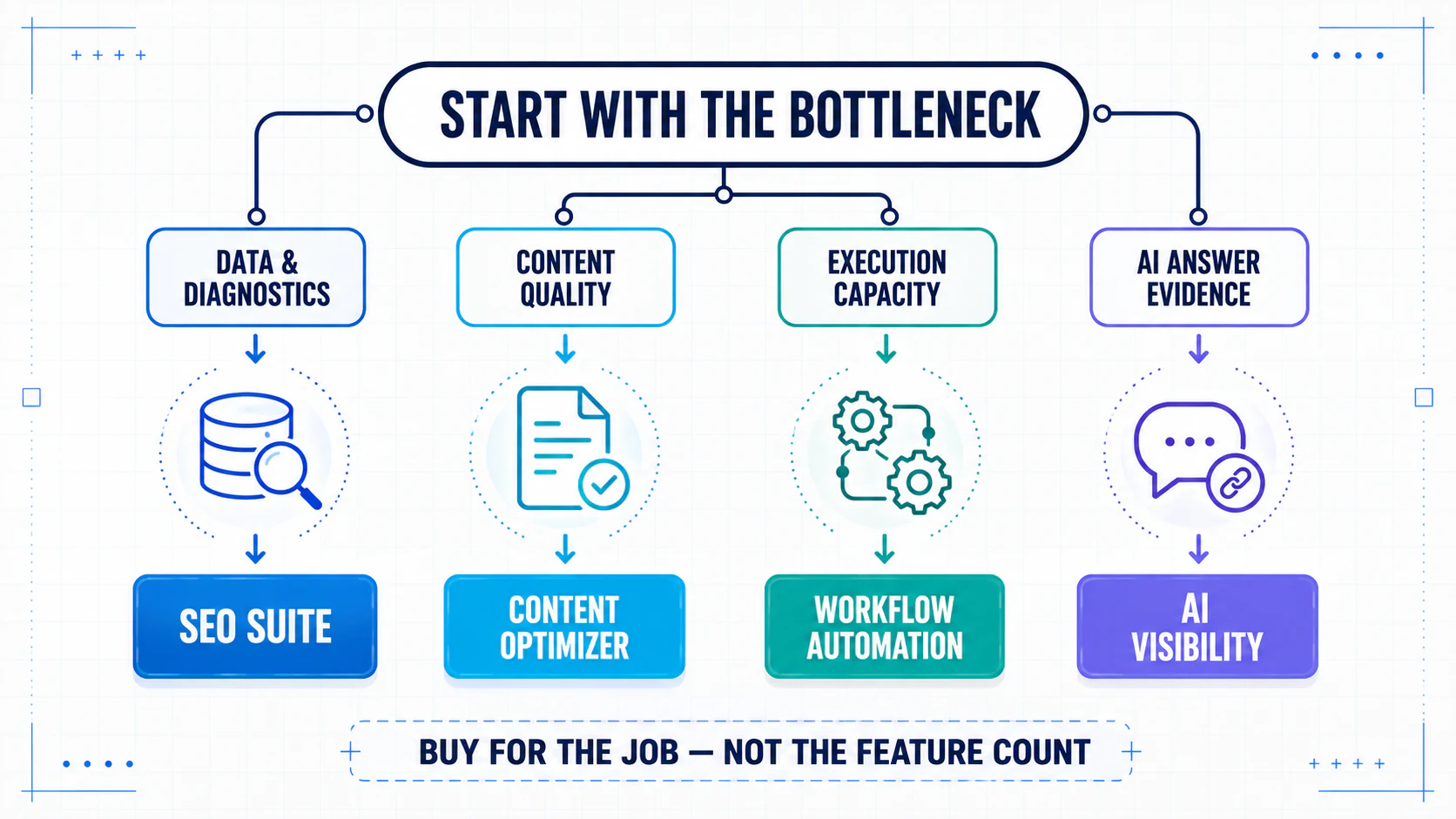
| If your situation is… | Start with… | Add only if… |
|---|---|---|
| We have no reliable SEO dataset | Semrush, Ahrefs, or SE Ranking | A content workflow is demonstrably the next bottleneck |
| We research well but publish too slowly | Frase or Writesonic | You need deeper editorial optimization or custom automation |
| Our drafts need more consistent coverage | Surfer or Clearscope | Portfolio prioritization is also weak |
| We have hundreds of pages and no refresh plan | MarketMuse | Writers need a separate live editor |
| We need programmatic or multi-step operations | AirOps | The workflow, inputs, tests, and approvals are already defined |
| We need to know how AI describes and cites our brand | Peec AI or OtterlyAI | Enterprise integration or governance requires Profound |
| We want SEO and AI visibility in one vendor | Semrush, Ahrefs, Surfer, or SE Ranking | A specialist tracker proves materially better coverage |
| We are a small business that will not operate an SEO tool | SEO.AI | You can assign a human approval owner for publishing and links |
Do not buy three platforms that all score the same article. Trial two finalists on the same site, query set, and workflow, then compare the decisions each one improves.
A practical 14-day evaluation process
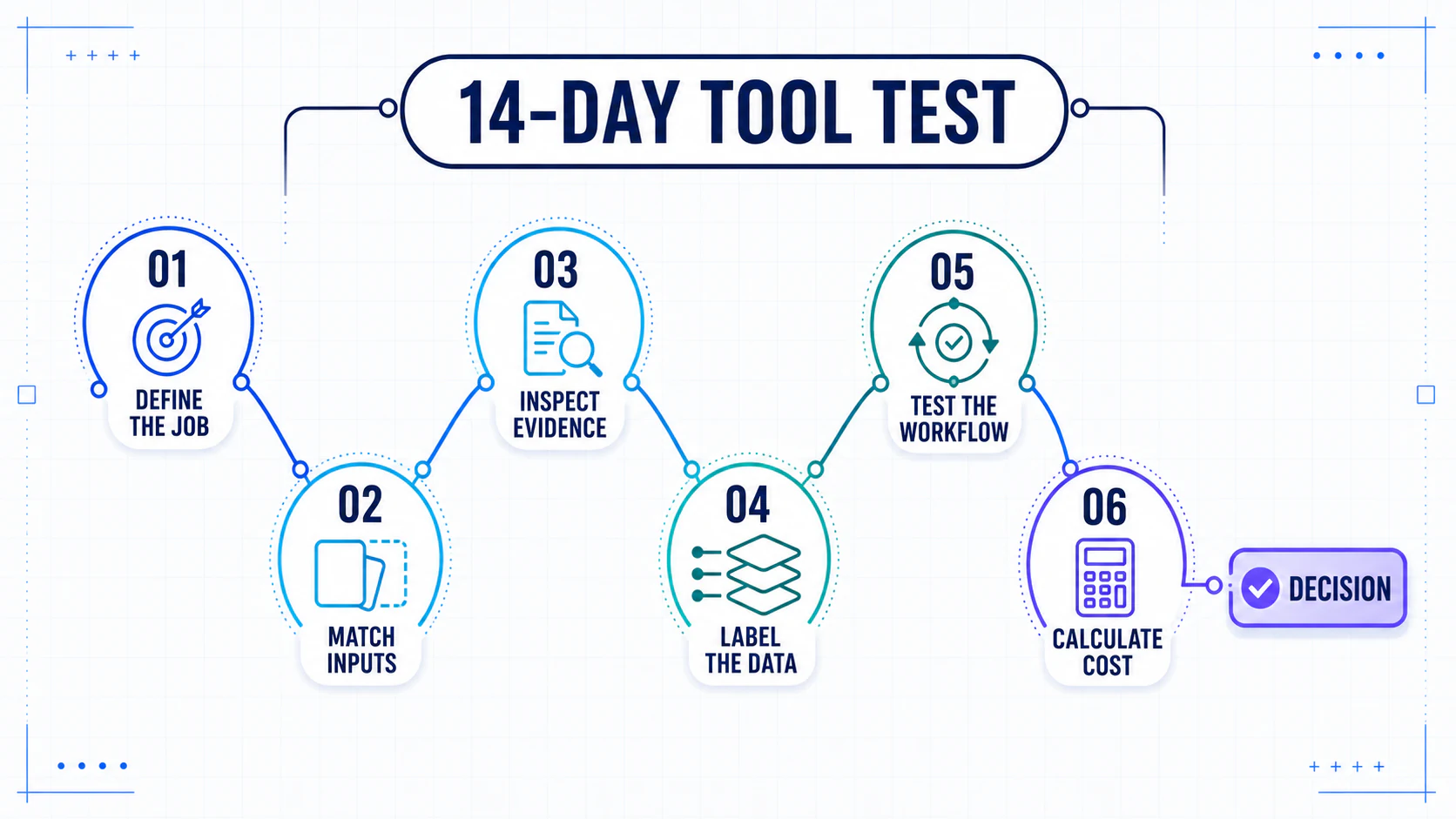
1. Define one job and one outcome
Examples: reduce brief-production time, identify pages losing rankings, find uncited high-intent prompts, or improve editorial consistency. “Use AI for SEO” is not a testable job.
2. Use the same test inputs
Give each shortlisted tool the same domain, five target pages, ten keywords or prompts, market, language, competitor set, and success definition. Otherwise, the comparison measures setup choices rather than product quality.
3. Inspect the evidence behind recommendations
Open the source pages, raw responses, cited URLs, keyword rows, or crawl findings. Reject conclusions that cannot be traced to inspectable evidence.
4. Separate observed, estimated, and generated data
A captured AI response is an observation. Search volume, difficulty, traffic potential, sentiment, and visibility scores are estimates or classifications. A generated recommendation is another layer. Label them separately in reports.
5. Test the real workflow
Export the data, invite the people who will use it, send one brief through editorial review, connect a non-critical CMS draft if needed, and reproduce one report. A strong demo is not the same as a usable weekly process.
6. Calculate total operating cost
Include domains, seats, prompt checks, markets, API usage, exports, onboarding, editorial time, and any second tool needed to fill a missing layer. The cheapest subscription can become the most expensive workflow.
What AI SEO software cannot replace
AI SEO tools can accelerate research and execution, but they do not create the source material that makes a page worth ranking or citing.
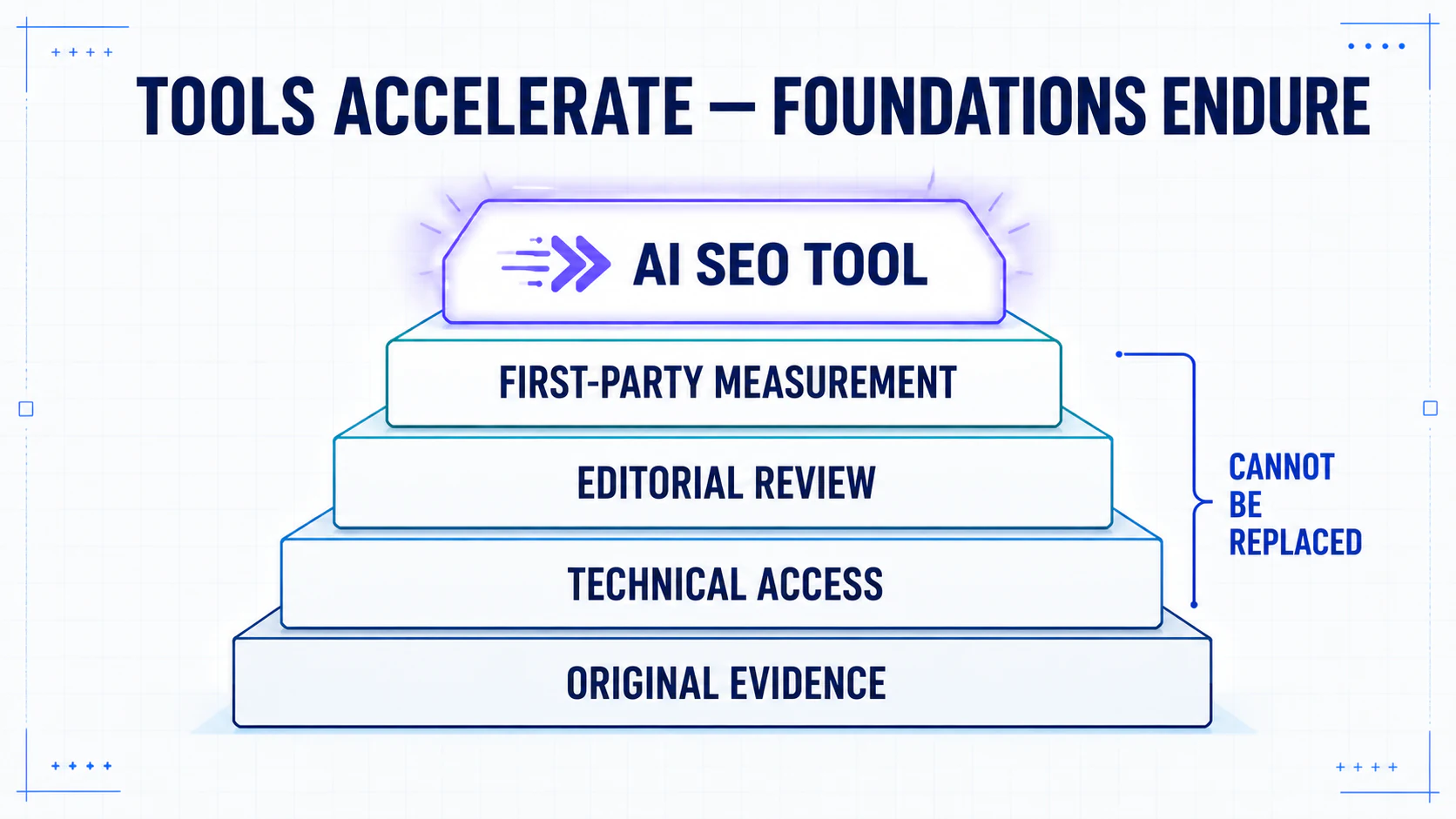
They do not replace:
- original research, customer evidence, subject-matter expertise, and first-hand examples;
- technical implementation and QA for crawl, rendering, canonical, performance, and structured-data problems;
- editorial responsibility for accuracy, differentiation, tone, and legal risk;
- digital PR, relationships, and legitimate authority building;
- Google Search Console, analytics, server logs, and CRM data for measuring real outcomes;
- a strategy that connects search demand to a useful product, service, or business result.
Google's own guidance for AI features says the same foundational SEO practices remain relevant for AI Overviews and AI Mode. There is no special schema or AI text file required for inclusion. A tool can help organize the work; it cannot shortcut indexability, people-first usefulness, or Search policies.
Frequently asked questions
What is an AI SEO tool?
An AI SEO tool uses machine learning, natural-language processing, or generative models to assist an SEO workflow. Depending on the product, that may include keyword research, SERP analysis, content briefs, drafting, on-page optimization, technical audits, rank tracking, workflow automation, or monitoring mentions and citations in AI-generated answers.
What is the best AI tool for SEO?
Semrush is the best broad starting point for a team that wants one established SEO and AI-search workspace. Ahrefs is a better fit when backlink and competitive research lead the workflow. Surfer or Clearscope is better when the main job is content optimization. There is no credible universal winner across every SEO task.
Are there free AI SEO tools?
Yes, but free tools usually solve one narrow task or impose small limits. Google Search Console is the essential free first-party measurement tool. MarketMuse offers limited free access, OtterlyAI and several other platforms offer trials, and SEO Review Tools provides free single-purpose utilities. Validate a workflow with free access before using a free score as a strategic KPI.
Can ChatGPT replace an AI SEO platform?
Not by itself. ChatGPT can help analyze supplied data, brainstorm, draft, classify, and automate work. A general assistant does not automatically include a current keyword database, backlink index, crawler, rank history, controlled prompt cohort, or your verified analytics. It becomes more capable when connected to approved live data, but the data source still matters.
Do AI SEO tools guarantee rankings or AI citations?
No. Search and AI-answer systems make their own selection decisions, outputs change, and competitors keep moving. Be wary of guarantees based on a content score or a tiny prompt sample. A useful platform improves decisions, evidence, speed, and repeatability; it does not control Google, ChatGPT, Gemini, or Perplexity.
How much should an AI SEO tool cost?
Entry products can start below $50 per month, focused tools often sit around $100–$300, and multi-site or enterprise systems can cost far more once prompts, seats, markets, data access, and services are included. Compare cost per completed workflow or decision—not cost per feature.
Do I need both an SEO suite and an AI visibility tracker?
Only if AI-answer visibility is important enough to operate as a separate program. Start with first-party search and conversion measurement plus a dependable SEO dataset. Add one AI visibility tracker when you have a defined prompt cohort, markets, competitors, reporting cadence, and owners who will act on source or narrative gaps.
Final recommendation
Start with the bottleneck, not the longest feature list. Choose Semrush, Ahrefs, or SE Ranking when the foundation is SEO data and diagnostics. Choose Surfer, Clearscope, Frase, or MarketMuse when the problem is content decisions. Choose Writesonic, AirOps, or SEO.AI when execution capacity is the constraint. Choose Profound, Peec AI, or OtterlyAI when you need repeatable evidence about AI mentions and citations.
Before purchase, run two finalists on the same inputs and inspect the raw evidence. Keep the platform that changes a real decision, fits the team's review process, and connects to business outcomes.
Use How to Measure AI Visibility to define the KPI framework before configuring a monitoring product. For implementation help, AppWebSeo's GEO service covers prompt cohorts, source analysis, technical access, content systems, and reporting without tying the strategy to one vendor.